Netflix Games in 2026: distribution channel or licensing deal for studios?
Netflix went cloud-first on TV, landed a FIFA World Cup exclusive and cut mobile titles. What a Netflix Games deal is, and is not, in a mobile studio's channel mix.
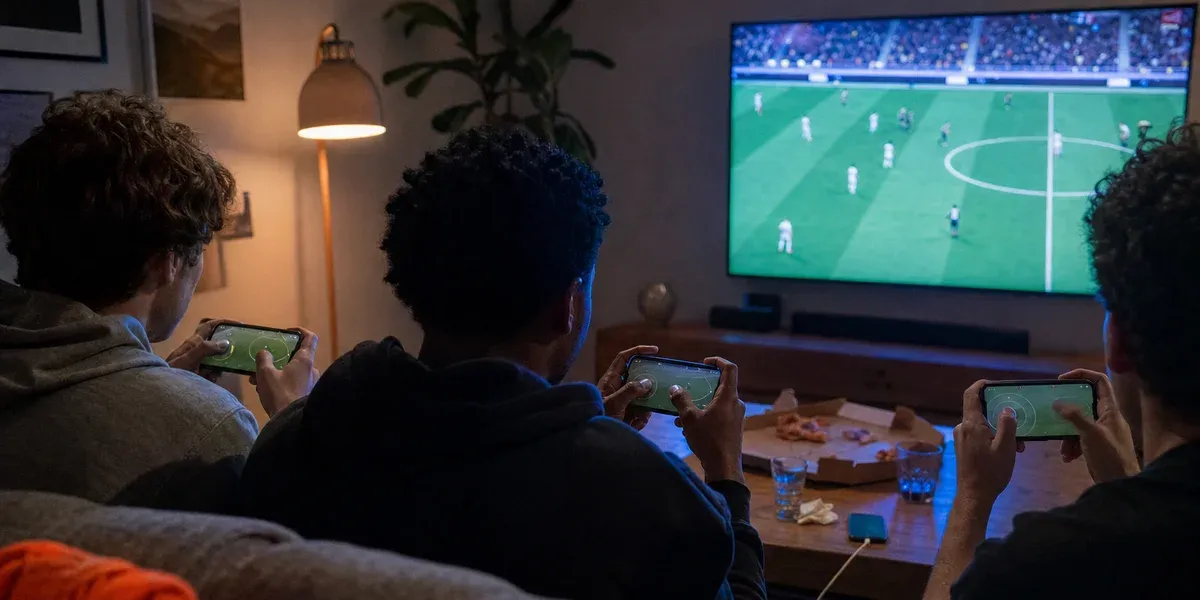
Direct answer — Is Netflix Games a distribution channel for a mobile game studio in 2026? Not in the way a store is. Netflix Games is a curated, subscription-funded catalog: members pay nothing per game, Netflix’s help pages promise no ads, fees or in-app purchases, and the company now describes its strategy as cloud-first, built around games played on the TV with a phone as controller. For a mid-size studio, a Netflix deal is best read as a licensing or funded-development transaction with a fixed horizon, valuable for cash and visibility, not as a channel where you own players or compound revenue.
Netflix does not publish a total game count in its shareholder letters, and fan-maintained trackers disagree with each other, so this piece does not rely on one. What Netflix has published is more useful: the direction of the business, the flagship it chose for the 2026 World Cup, and what happened to the mobile titles it no longer wanted.
What does Netflix Games actually look like at the end of 2026?
It is a TV-first service with a shrinking mobile shelf and a smaller in-house footprint. Four facts frame it.
The strategy is officially cloud-first. In its Q4 2025 letter, dated 20 January 2026, Netflix listed “scaling our cloud-first games strategy” among its 2026 priorities. The same letter says it rolled out “cloud-delivered TV-based party games, including Boggle, Pictionary, Lego Party and Tetris, to roughly one-third of our members” that quarter. Netflix’s help center still labels TV and computer play a beta, available in 20 countries, including the United States, the United Kingdom, Brazil and Mexico, and it states that “Gamepads and other controllers aren’t supported”: players connect their phones instead.
The FIFA flagship was built for the TV, not the phone. When it was announced in December 2025, PocketGamer.biz reported the title as developed and published by Delphi Interactive and exclusive to Netflix members. By launch, Netflix’s own announcement on 4 June 2026 described FIFA World Cup: Launch Edition as “available exclusively on Netflix Games starting June 11”, with “your phone is the controller and your TV is the stadium”, for up to four players, and “a streamlined, high-energy game that will evolve over time”. In its Q2 2026 letter Netflix called it one of its “two most successful cloud game debuts”, alongside Unhinged, and its August recap says that “During the World Cup window, it was the #1 most-played Netflix game.”
Mobile is being pruned. In June 2025 Netflix confirmed it would delist more than 20 of its mobile games, including Hades, Braid and the Monument Valley series, according to Video Games Chronicle. Kids are the exception: the Q2 2026 letter reports that Netflix Playground, its kids games app, saw 3x growth in daily players since its April launch and that kids mobile games engagement was up 600% year over year.
The in-house studio bet is mostly over. Game Developer reported on 13 August 2026 that Netflix was closing Night School Studio and Moonloot, after shutting Team Blue in 2024 and Boss Fight in October 2025, and after Spry Fox was bought back by its co-founders. Netflix Mini Golf maker Next Games is the only studio left aside from Netflix’s internal games team. A spokesperson said Netflix sees “an opportunity to be more focused in our execution” around its key areas: kids, party, narrative and mainstream games.
One more signal is worth noting: Netflix’s Q3 2026 letter, dated 20 October 2026, has no update on its games business (video games appear only in the forward-looking-statements boilerplate), and the Q2 letter notes that “Game play hours are not included in our What We Watched report.” A studio negotiating with Netflix gets very little public data to benchmark against.
Is a Netflix deal a distribution channel, a licensing exit or a competitor?
Mostly the second. Here is what is publicly known about how the model works, and where the gaps are.
The player pays nothing, so your revenue is whatever Netflix pays you. Netflix’s TV games help page states the rule plainly: “All games—mobile and TV—are included with your membership: No ads, fees, or in-app purchases.” The mobile page repeats it: “No ads. No extra fees. No in-app purchases.” That removes every lever a free-to-play studio normally pulls: no IAP economy, no ad monetization, no web shop on the side. Netflix does not publish its deal terms, so whether a given title is licensed for a flat fee, funded as development work or structured some other way is between the studio and Netflix. Treat any figure you hear second-hand as unverified.
The license has an end date, and Netflix controls it. The 2025 delistings showed how that plays out. ustwo games told players that Monument Valley 3 was leaving Netflix, “something that is sadly out of our control.” Devolver Digital said it was “looking at bringing games that leave services like Poinpy, Katana Zero, and Death’s Door to mobile stores as premium titles”. Video Games Chronicle reported at the time that Devolver’s Poinpy was already being re-released. Whatever audience a game builds inside Netflix stays behind a Netflix login; the relaunch starts as a separate release.
Mobile titles still sit on Apple’s and Google’s stores. Netflix’s mobile help page tells members to install games from the App Store or the Google Play Store. A Netflix mobile game is a store listing that only works with an active Netflix membership. It does not get you out of the duopoly. It puts your game inside someone else’s subscription that happens to be distributed through the duopoly.
It competes with your D2C effort only if you let it. An exclusive with Netflix means, for the length of the deal, the players of that title are Netflix members first and your audience second. If your plan is to build a direct relationship with players, a Netflix exclusive defers that plan rather than feeding it.
How is the catalog model different from a storefront?
A store rents you shelf space and takes a cut of what players spend. A subscription catalog buys or funds content to keep members subscribed. The economics run in opposite directions.
| Storefront (Play, App Store, alt stores, OEM) | Netflix Games catalog | |
|---|---|---|
| Who pays the studio | Players, minus the store’s fee | Netflix, on private terms |
| In-game monetization | IAP, ads, subscriptions | None for members, per Netflix’s help center |
| Who owns the player relationship | Shared with the store; yours via accounts and CRM | Netflix’s member profile |
| Duration | Open-ended, your decision | Set by the deal; Netflix delisted 20+ mobile titles in 2025 |
| Upside if the game hits | Scales with players | Depends on deal terms, which are not public |
| Platform in 2026 | Phone first | TV first, phone as controller |
| Public performance data | Store consoles, your analytics | Game play hours excluded from Netflix’s What We Watched report; only occasional headline claims |
This is why the catalog model sits closer to IP licensing than to store-based distribution. The question is not “how many installs will Netflix deliver?” but “what is this license worth against what the game would earn, and what can we do with it afterwards?”
Where does Netflix fit in a multi-channel stack?
For most mobile studios, Netflix is a business-development opportunity to evaluate occasionally, not a channel to build around. It fits a narrow set of titles and leaves the rest of the stack untouched.
Who should take the meeting. Studios whose game already matches one of Netflix’s stated focus areas (kids, party, narrative, mainstream), and especially those whose game can be played on a TV with a phone as controller. Netflix’s 2026 flagships, the party games and the FIFA title, all work that way. A premium narrative game with no live-ops economy loses the least from the no-IAP rule. A free-to-play title built around in-app purchases loses its whole business model inside the catalog.
What to negotiate for, given what is public. Duration and the right to republish when the license ends. The 2025 delistings show that the game returns to the stores as a fresh launch, so the post-Netflix launch should be planned before signing. Also ask what data you will receive: Netflix excludes game play hours from its What We Watched report and shares only occasional headline claims, so anything you need for your own forecasting has to be in the contract.
How it differs from other cloud channels. We covered the publisher-side mechanics of streaming, from GeForce NOW to GameLift Streams, in cloud gaming as a distribution channel. Netflix differs in one decisive way: the player never buys your game, so there is no ownership or entitlement for you to monetize elsewhere. Netflix’s own phrase for it is “cloud-first”, but commercially it is a license, not a streaming storefront.
Where it sits next to the rest. A Netflix deal can fund a title while alternative stores, OEM placements and a web build carry the studio’s other games, or that same game once the license ends. Sequence it the way our multi-channel distribution framework suggests for any layer: what it costs, what it earns, what it locks up, and for how long.
FAQ
Do Netflix games have ads or in-app purchases?
No, according to Netflix’s help center: “All games—mobile and TV—are included with your membership: No ads, fees, or in-app purchases.” A studio cannot monetize players inside a Netflix game; its revenue comes from its agreement with Netflix.
How do studios get paid by Netflix Games?
Netflix does not publish its deal terms. What is public is that members pay nothing per game, that Netflix delisted more than 20 mobile games in 2025, and that some publishers, such as Devolver Digital, moved titles back to the mobile stores afterwards. Plan around a fixed-term license, not a revenue share.
Is the FIFA World Cup game on Netflix a mobile game?
Netflix’s launch announcement presents FIFA World Cup: Launch Edition as a TV game: “your phone is the controller and your TV is the stadium”, for up to four players. It launched exclusively on Netflix Games on 11 June 2026, and Netflix’s Q2 2026 letter counted it among its two most successful cloud game debuts.
How many games are on Netflix in 2026?
Netflix does not publish a total count in its shareholder letters, and third-party trackers disagree. Its mobile help page advertises “more than 80 exclusive mobile games”, a mobile-only figure that does not cover the TV catalog. What Netflix has confirmed is the direction: TV-based cloud games are growing, and more than 20 mobile games were delisted in 2025.
If you are weighing a licensing offer against keeping the game in your own channels, our distribution team can help you model both paths, and smaller studios can start through the Founding Developer Program.
Sources
- Netflix Q4 2025 Shareholder Letter
- Netflix Q2 2026 Shareholder Letter (Form 8-K, Exhibit 99.1)
- Netflix Q3 2026 Shareholder Letter (Form 8-K, Exhibit 99.1)
- Turn Your Living Room into a Stadium With the New 'FIFA World Cup: Launch Edition' Game, Exclusively on Netflix Games June 11
- By the Numbers: How World Cup Fever Took Over Netflix
- Play games on TVs and computers | Netflix Help Center
- Play games on mobile devices | Netflix Help Center
- Netflix partners with FIFA to launch football simulation game ahead of the FIFA World Cup 2026
- Netflix is delisting 20+ mobile games next month, including Hades, Braid and Monument Valley
- "Out Of Our Control": Developers and Gamers React To More Games Being Pulled from Netflix
- Netflix closing Oxenfree developer Night School Studio and Moonloot Games